Adventure · Appalachian Trail · Gear · Gear List
Appalachian Trail Thru-Hike Backpacking Gear List – Before and After
By Ashli · Published April 28, 2017 · Updated November 1, 2017
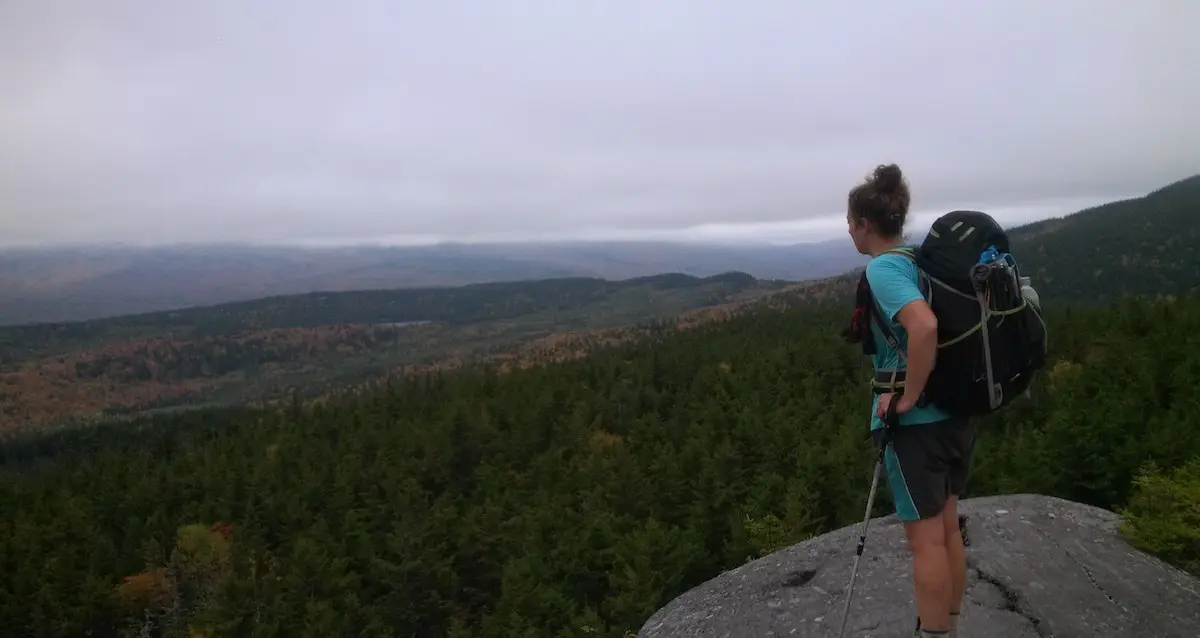
My name is Ashli, AKA ‘Katniss Neverclean’. In 2014, I completed a northbound thru-hike of the Appalachian Trail.
My initial pack weight was about 25 pounds without food. That’s pretty darn good to start when compared to other starting pack weights.
Once I started hiking everyday, I realized that if I wanted to hike big miles and keep my body in one piece, I would need to go lighter. I ended my trip with my base weight at about 16 pounds. Still not ultralight but my final set up worked really well for me.
This is a comparison of the gear list that I started out with, what I ended with and what I would do differently in the future.
Go here to check out my current gear list!
Key:
→ = Changed from this to that
strike = Gone within the first few weeks
* = Kept the whole time
( ) = Seasonal
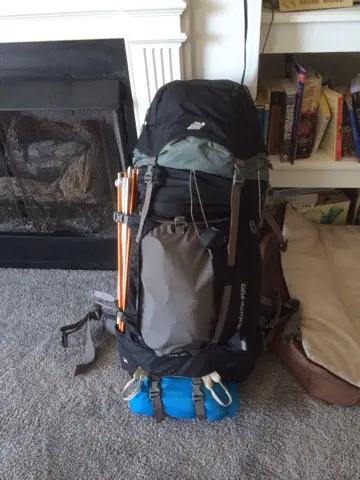
At the beginning, my pack weight over 25 pounds
Backpack
Eastern Mountain Sports Trail 50 → REI Flash 45
Somewhere in Virginia, I was lucky enough to acquire a lightweight pack from a friend who no longer wanted it. The Flash 45 was at least 2 pounds lighter than the Trail 50. The difference in weight made a huge difference, and by that point, I could fit all of my belongings into a smaller bag.
Tent
REI Quarter Dome T2 → Big Agnes – Copper Spur UL 1 Person Tent
I originally shared the Quarter Dome T2 with my hiking partner in order to save money. By the time we hit Virginia we had both decided it was worth the money to have our own sleeping space. Dear god the smell. This tent worked really well for me. I liked having a space to organize my things in the morning, especially if it was raining. It was also nice to have a little space all to myself. The trail is a very social place and sometimes after a tough day, I just needed to be alone.
This tent worked really well for me. I liked having a space to organize my things in the morning, especially if it was raining. It was also nice to have a little space all to myself. The trail is a very social place and sometimes after a tough day, I just needed to be alone.
The Copper Spur, to this day, is my favorite tent. After returning from the trail, I went out and bought the 3-person version to share with my husband and dogs.
I highly recommend using a footprint to protect the floor of the tent.
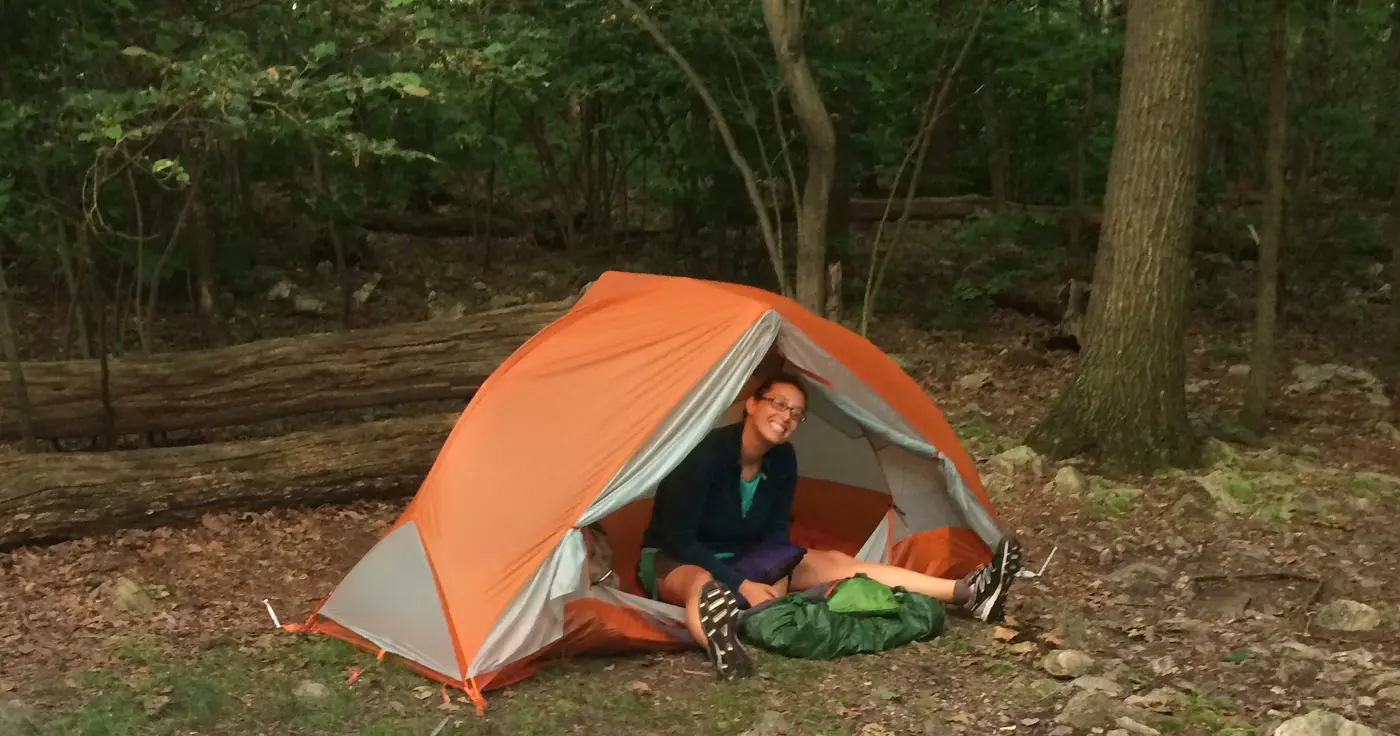
The Big Agnes Copper Spur was my home away from home
Sleeping System
- REI Joule 23 women’s sleeping bag*
- Klymit Insulated Static V Sleeping Pad*
- Cocoon Hyperlight AirCore Pillow*
I thought long and hard about my sleeping system. I figured that I would be spending almost as much time sleeping as I did hiking, and I wanted to be comfortable. I am a cold sleeper so I stuck with the Joule Sleeping Bag the entire way. Try as I might I just couldn’t justify getting rid of the pillow. It was so comfortable and only weighed a few ounces. Some people would use their clothes bag, but when you start pairing down your clothes to just the essentials, there isn’t much leftover.
Clothes
- REI Fleet SS Shirt*
- Smartwool Womens NTS Midweight 250 Merino Wool Pattern Zip Neck Baselayer Top*
LS shirtREI Midweight Baselayer topREI Midweight Baselayer Bottoms- REI Revelcloud Synthetic Jacket (Springer-Pearisburg, Killington-Katahdin)
Mountain Hardwear Phantom Hooded Down Jacket- Marmot Women’s PreCip Jacket (Springer-Pearisburg, Killington-Katahdin)
- Smartwool Women’s NTS Mid 250 Bottom*
- REI Fleet Shorts*
- Town shorts (Pearisburg-Killington)
- Hiking Pants (Springer-Pearisburg)
- 1-2 Sports bras
- 2-3 pair Smartwool Women’s Hiking Medium Crew Socks
- 2-3 pair Patagonia underwear
- Wool hat (Springer-Pearisburg)
- Fleece Headband (Killington-Katahdin)
- Fleece Gloves (Springer-Pearisburg, Killington-Katahdin)
- Balaclava (Rangeley, ME-Katahdin)
- 1-2 bandanas
I started out with way too many clothes. I was afraid of being cold, but ended up being over prepared. In the summer months, I sent even more home like my rain and insulated jackets and had them sent back to me in Killington, VT.
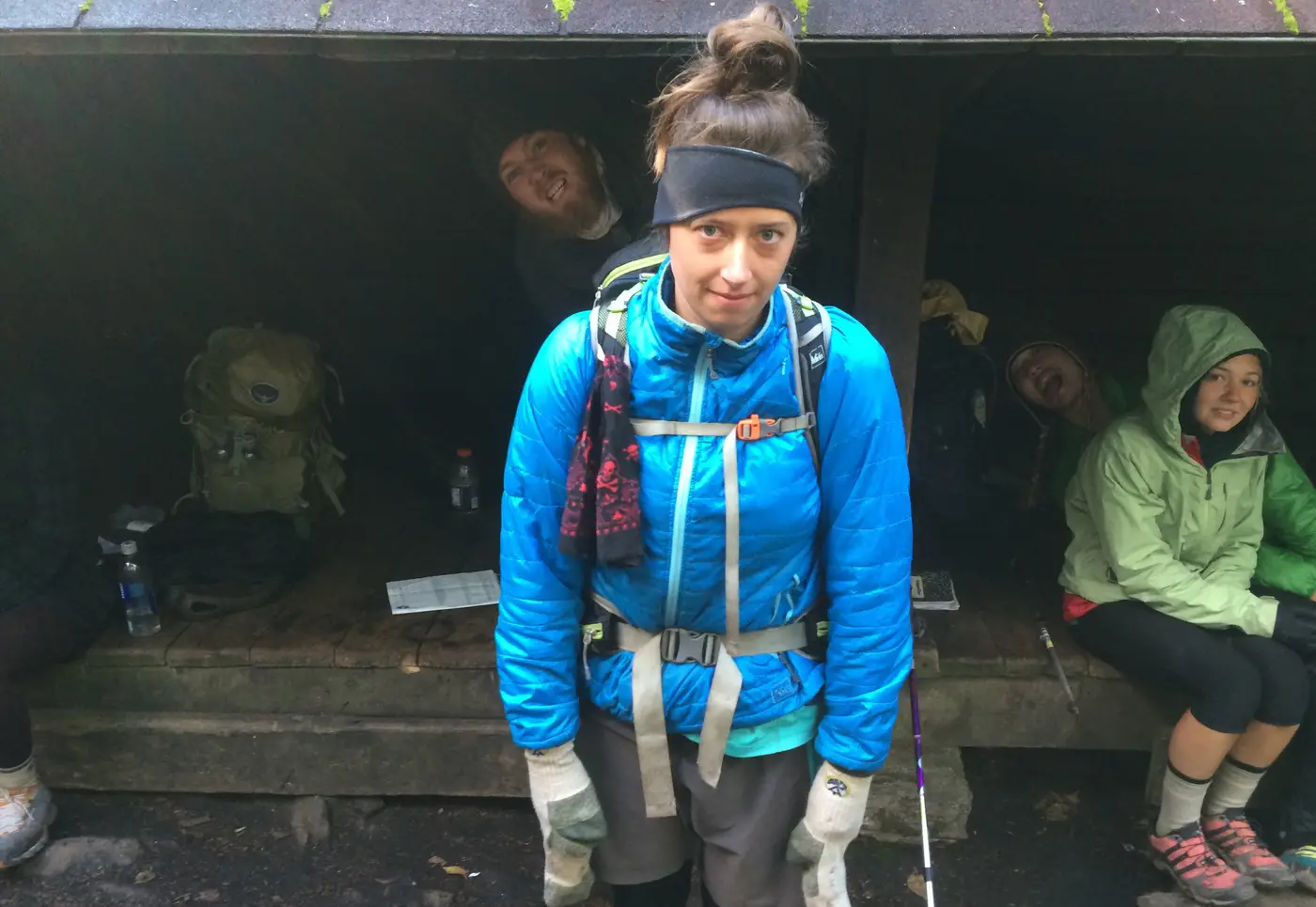
Why Yes, those ARE socks on my hands
Shoes
- Salomon Sense Mantra*
- Superfeet GREEN Insoles*
- Flip flops (Springer-Killington)
Trail runners worked great for me. I added the Superfeet because I tended to roll my feet inwards. The arch support in the Superfeet helped my feet deal with a heavy pack and lots of miles. The Appalachian Trail is incredibly rocky, so extra support is necessary. Especially in ‘Rocksylvania’.
Cooking
- Snow Peak 900ml titanium pot with lid*
- HEET Alcohol fuel and container*
- Soda can alcohol stove*
- Snow Peak Titanium Spork*
- Lighter*
Snow Peak Titanium Single 600 Wall Cup- REI mini Pack towel*
I am surprised to say that the stove that I made out of a Coke can lasted the whole trip and is still quite functional. This is one of the lightest weight stove options. Hot meals (and coffee) are important to me.
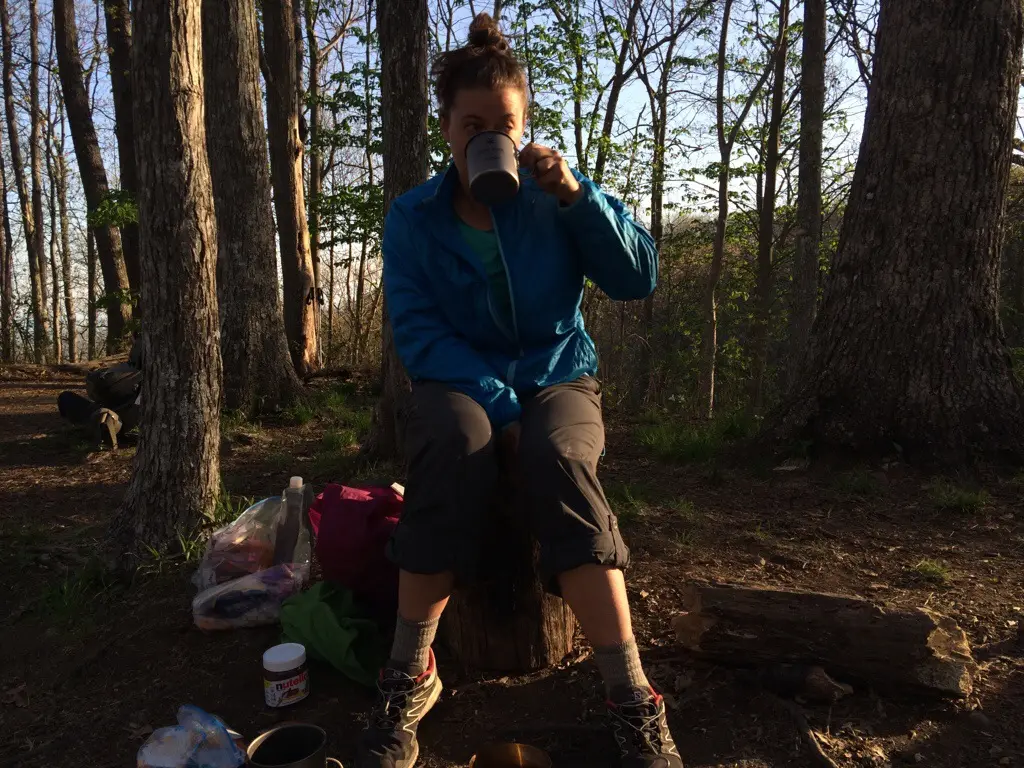
Coffee is of utmost importance
Water
MSR Hyperflow Water Filter → Sawyer Mini Water Filtration System
3L Platypus Hoser bladder and 1L Platypus Soft Bottle → 2 Smartwater bottles
On the Appalachian Trail, it is very important to filter your water. I knew several hikers that got very sick from drinking unfiltered water, and even one who went home with worms!
The cost of the repair kit for the Hyperflow was the same as a brand new Sawyer Mini. Hard bottles work best with the Mini. Smartwater bottles are super light, made of more durable plastic than cheaper water bottles and their thin and tall size fits well into packs.
Toiletries/First Aid
- Contacts*
- Glasses with case*
- Contact Solution*
- Advil*
- Body butter
- Gold bond (Harpers Ferry-Killington) Seriously at one point I considered writing a love poem to Gold Bond. I found the solid stick deodorant style worked best.
- Dr. Bronner’s Fair Trade and Organic Castile Liquid Soap*
- Inhaler*
- Toilet paper*
- Tweezers*
- Toothpaste and toothbrush*
- “Girl Stuff”
- Extra headlamp batteries*
Sleeping pad repair kit- Chapstick*
DeodorantHA! Gone by Fontana Dam. I once read that putting deodorant on a thru-hiker is like putting lipstick on a pig.
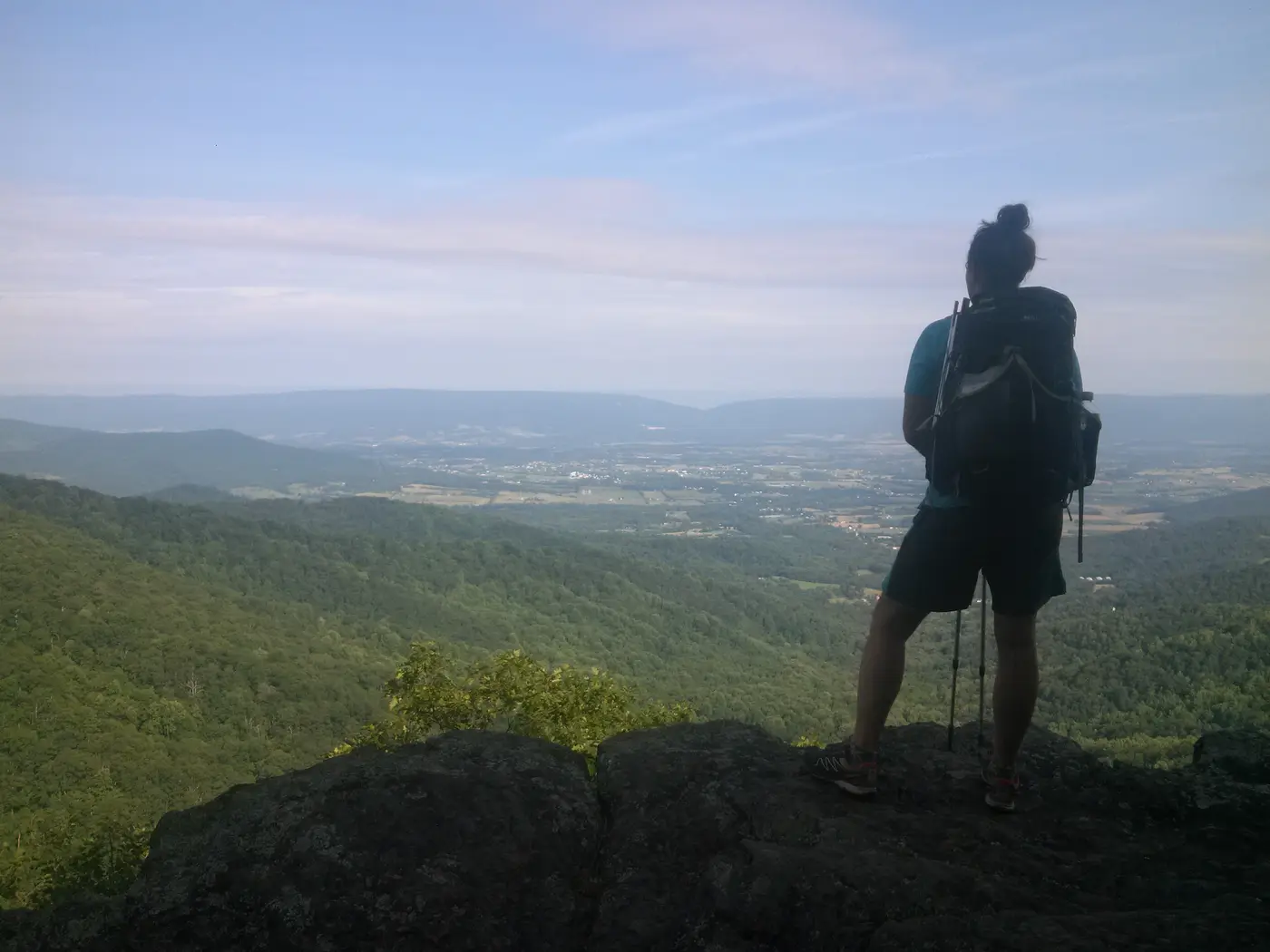
By the time I hit Pennsylvania, my pack weight was significantly lighter
Miscellaneous
- AWOL guide*
- Petzl Tikka 2 Headlamp*
- REI Trekking Poles*
- Duct tape (attached to trekking poles)*
- Phone and charger with Mophie Case*
- Sea to Summit Ultra-Light Pack Cover*
- Gerber EVO Serrated Knife
- PMI Utility Cord
- Sea to Summit Stuff Sacks and Sea to Summit eVent Compression Dry Sack
- Sit pad (Franklin, NC-Killington)
What I would Change
If I were to do another thru-hike, here are some additional changes I would make:
- Lighter and smaller sleeping pad such as the NeoAir Xlite
- Lighter and more waterproof rain jacket such as the Marmot Minimalist
- Warmer Jacket in the fall. September in Maine was very cold.